Bioinformatics HPC Storage Revolution: How All-Flash Arrays Accelerate Genomic Sequencing and Drug Discovery
Oct 11, 2025

Follow me on:
The landscape of life sciences research is undergoing a seismic shift. With next-generation sequencing technologies becoming more accessible and affordable, research institutions and pharmaceutical companies are generating unprecedented volumes of genomic data. This data deluge presents both extraordinary opportunities and significant challenges, particularly in how we store, process, and analyze this information to accelerate critical discoveries.
The Bioinformatics Data Tsunami and Storage Performance Bottlenecks
A single human genome sequencing run can produce over 100 gigabytes of raw data. When you scale this to population-level studies involving thousands of participants, the storage requirements quickly escalate to petabytes. Traditional storage architectures, often built on hard disk drives (HDDs), are buckling under this pressure. The random I/O patterns characteristic of genomic analysis—where researchers frequently access small files across massive datasets—create performance bottlenecks that slow down entire research pipelines.
Meeting the biomedical big data storage requirements of modern research facilities demands more than just capacity. It requires storage solutions capable of delivering consistent high performance for data-intensive workloads. When alignment tools like BWA-MEM or variant callers like GATK must wait for data from storage, valuable compute resources sit idle, and research timelines extend unnecessarily.
Data-Intensive Computing in Genomic Sequencing and Drug Development
The journey from raw sequencing data to actionable insights involves multiple computationally intensive stages. It begins with base calling and quality control of raw FASTQ files, proceeds through alignment to reference genomes, and culminates in variant calling and annotation. Each stage presents unique demands on the storage infrastructure.
In parallel, modern drug discovery leverages sophisticated computational approaches including molecular dynamics simulations, virtual screening of compound libraries, and analysis of high-throughput assay data. These applications frequently involve thousands of simultaneous processes accessing shared datasets, creating enormous I/O pressure that can bring conventional storage systems to their knees.
The ability to accelerate drug discovery HPC workflows directly correlates with how quickly researchers can access and process these massive datasets. When storage becomes the bottleneck, it impacts everything from initial research to clinical trial design, potentially delaying life-saving treatments from reaching patients.
Core Storage Requirements for HPC in Bioinformatics
High-performance computing environments for life sciences research demand storage systems optimized around three critical performance metrics:
- Throughput: Measured in gigabytes per second, throughput determines how quickly large datasets can be read from or written to storage. This is crucial for loading reference genomes or processing large BAM files.
- IOPS (Input/Output Operations Per Second): This metric reflects the storage system’s ability to handle numerous small I/O requests simultaneously, which is essential for operations involving many small files or metadata operations.
- Latency: The delay between a request and response from the storage system. Low latency is particularly important for interactive analysis and applications with frequent metadata operations.
Genomic analysis workflows typically exhibit mixed I/O patterns—large sequential reads during alignment phases combined with random access patterns during variant calling. A storage solution for genomics research must excel across all these patterns to prevent workflow bottlenecks.
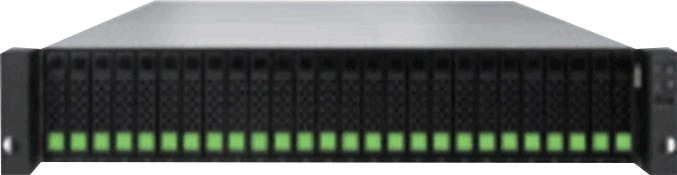
LST-F3100 All-Flash Array: Engineered for Genomic Performance
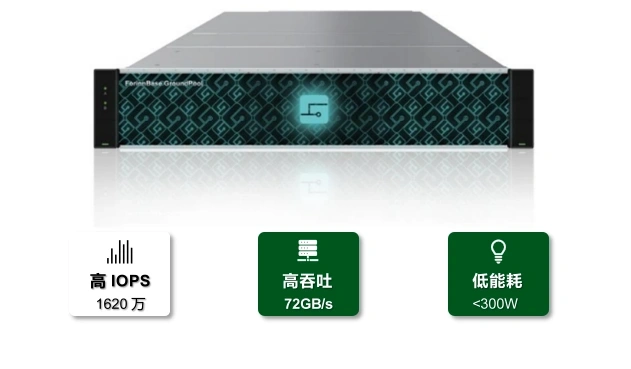
The LST-F3100 All-Flash Storage Series addresses these challenges head-on with its NVMe-optimized architecture. By eliminating mechanical seek times entirely, it delivers consistent sub-millisecond latency and massive IOPS capability, making it ideal for the most demanding genomic analysis workloads. Researchers can process more samples in less time, significantly accelerating time-to-insight in critical research projects.
Strategic Advantages of All-Flash Arrays in Bioinformatics HPC
The transition to all-flash storage represents more than just a performance upgrade—it’s a fundamental rearchitecture of the data pipeline. Solid-state storage media fundamentally changes the I/O dynamics of bioinformatics workflows, enabling researchers to process genomic data in hours what previously took days.
A strategic approach to storage deployment involves tiering data based on access patterns and performance requirements. Active analysis datasets requiring maximum performance reside on all-flash arrays, while less frequently accessed data can be cost-effectively stored on secondary systems.
Optimizing Data Lifecycle with LST-D5300 DAS Storage
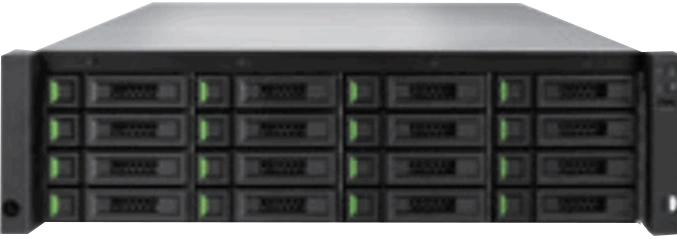
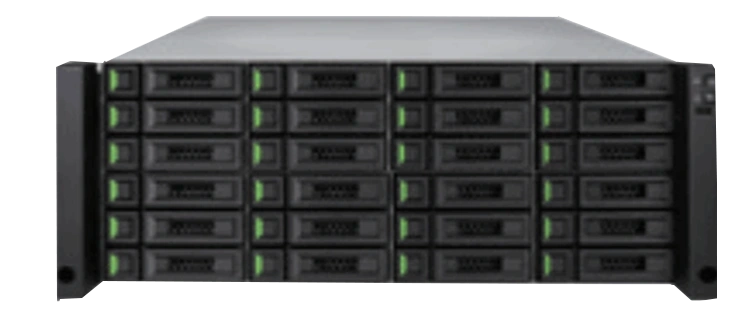
The LST-D5300 Series DAS Storage provides a high-density, scalable solution for archival and secondary storage needs. With its cost-effective capacity scaling, research institutions can maintain years of genomic data for future reanalysis while keeping primary all-flash resources dedicated to active research projects.
Purlin Parallel File System: Maximizing Flash Potential
To fully leverage the performance of all-flash arrays in multi-node HPC environments, a parallel file system is essential. Purlin Parallel File System is specifically engineered for high-concurrency environments, distributing data across multiple storage nodes while presenting a unified namespace to compute clusters. This architecture ensures that as researcher teams grow, storage performance scales accordingly without creating bottlenecks.
Distributed Storage and Hyperconverged Architectures for Scalable Biology Platforms
As research collaborations expand across institutions and borders, storage infrastructure must provide elastic scaling capabilities. Distributed storage architectures address this need by allowing capacity and performance to grow linearly through the addition of standardized nodes.
LST-E5000 Distributed Storage: Building Scalable Data Lakes
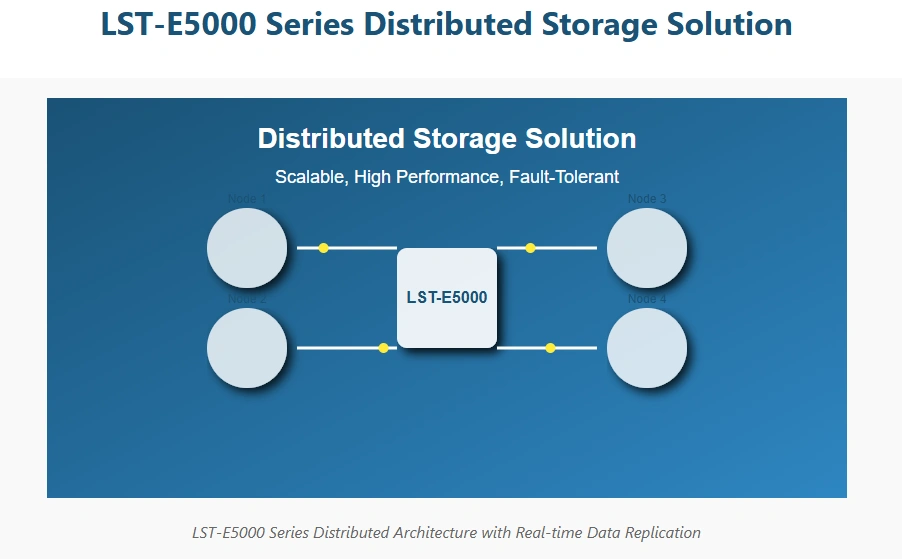
The LST-E5000 Series Distributed Storage system employs a scale-out architecture that enables research institutions to start with a minimal configuration and expand seamlessly to multiple petabytes. Its built-in data protection mechanisms ensure research data remains secure and available even in the event of hardware failures, providing peace of mind for long-term genomics projects.
LST-H5000 Hyperconverged Infrastructure: Simplified HPC Deployment
For smaller research teams or regional facilities, the LST-H5000 Hyperconverged All-in-One system integrates compute, storage, and networking into a single managed platform. This dramatically simplifies deployment and ongoing management while providing a balanced architecture that can handle diverse bioinformatics workloads without the complexity of managing separate systems.
Pushing Performance Boundaries: FPGA and Network Acceleration
Beyond storage, specialized hardware accelerators are playing an increasingly important role in bioinformatics HPC environments. For certain computational tasks, general-purpose CPUs are no longer sufficient to meet performance requirements within acceptable timeframes.
LightBoat 2300 FPGA Accelerator: Hardware-Optimized Genomics
The LightBoat 2300 Series FPGA Accelerator Card brings application-specific processing to bioinformatics workflows. By implementing key algorithms like sequence alignment and data compression directly in hardware, researchers can achieve order-of-magnitude performance improvements for these specialized tasks, dramatically reducing time-to-results.
High-Speed Networking with LS-H22-2100
Even the fastest storage system can be hampered by network bottlenecks. The LS-H22-2100 Network Card provides high-bandwidth, low-latency connectivity between compute nodes and storage systems. Supporting both InfiniBand and high-speed Ethernet standards, it ensures that data can flow unimpeded throughout the HPC environment, maximizing the return on investment in high-performance storage infrastructure.
| Technology | Primary Benefit | Ideal Use Case in Genomics |
|---|---|---|
| All-Flash Arrays | Eliminates I/O bottlenecks for random access patterns | Variant calling, quality control, interactive analysis |
| Distributed Storage | Linear scaling of capacity and performance | Population genomics, multi-institutional collaborations |
| FPGA Accelerators | Hardware-optimized specific algorithms | Sequence alignment, data compression/decompression |
| High-Speed Networking | Eliminates data transfer bottlenecks | Multi-node workflows, data replication between sites |
Real-World Impact and Future Directions
Leading genomic research centers that have implemented all-flash storage infrastructures report dramatic improvements in workflow efficiency. Some institutions have documented analysis time reductions of 60-80% for complex genomic pipelines, enabling researchers to iterate more quickly and explore larger datasets than previously possible.
Looking forward, emerging technologies like NVMe-over-Fabrics (NVMe-oF) will further decouple storage performance from physical location, enabling researchers to access high-performance storage resources across campus or even between collaborating institutions with minimal latency penalty. Computational storage devices that process data where it resides will also play an increasing role in optimizing bioinformatics workflows.
As genomic sequencing becomes increasingly integral to personalized medicine and drug development, the storage infrastructure supporting these efforts must continue evolving. The convergence of high-performance flash storage, specialized accelerators, and scalable architectures is creating unprecedented opportunities to extract insights from biological data that were previously impractical due to computational limitations.
The future of life sciences research will be built on foundations of data—and how we store, access, and process that data will determine the pace of discovery for years to come.